
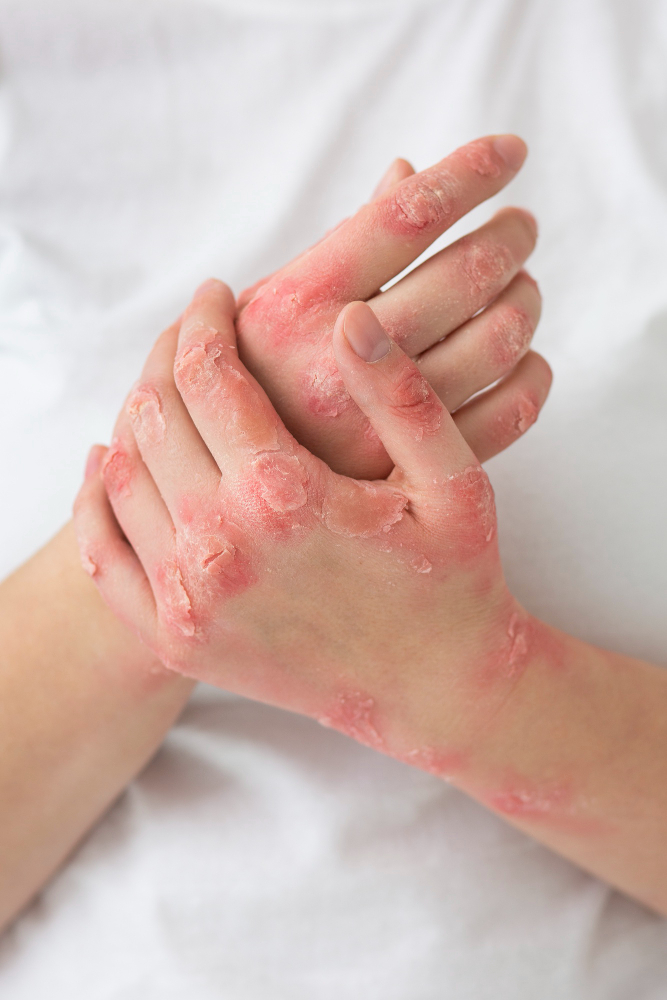
Imagine waking up one day and struggling to move your fingers, knees, or back—all starting with something as “harmless” as a skin rash. A patch of dry skin that refuses to heal. You ignore it, adapt, and keep going. But months later, the pain spreads, your joints swell, and even simple tasks become difficult. You might be facing more than just fatigue or a minor skin condition.
Those flaky patches you keep treating could actually be the first signs of psoriatic arthritis, a condition that affects not just your appearance but also how you move, work, and live. It is an autoimmune disease in which your body’s defense system mistakenly attacks healthy joints and skin rather than harmful germs. Psoriatic arthritis doesn’t make itself known loudly, and by the time most people realize what is happening, the damage may already be done.
What Exactly Is Psoriatic Arthritis?
Psoriatic arthritis (PsA) is a long-term disease where the immune system attacks your joints and sometimes your skin. It usually affects people who already have Psoriasis, but not always. Some people develop joint pain first before any skin symptoms appear. Psoriasis patches don’t always look bright red like in textbooks. They can appear purple, brown, or grey with silvery-grey scales – especially on elbows, knees, scalp, or lower back. This can make it easy to miss, so don’t ignore those itchy, scaly spots!
Who Gets It and Why?
Anyone can get Psoriatic arthritis, but it usually starts between the ages of 30 and 50. It runs in families – if your mum, dad, or sibling has psoriasis or arthritis, your risk goes up. Other triggers include:
- Stress
- Infections (like strep throat)
- Smoking or too much alcohol
- Obesity (extra weight puts more pressure on already inflamed joints)
The exact cause isn’t fully known, but genes + immune overdrive + everyday triggers = flare-ups.
Common Symptoms – Spot Them Early
Psoriatic arthritis can sneak up slowly or hit hard. Watch for:
- Joint pain, swelling, and stiffness – especially in fingers, toes, wrists, ankles, or lower back. Morning stiffness that lasts over 30 minutes is a red flag.
- “Sausage digits” (dactylitis) – entire fingers or toes swell up like hot dogs.
- Nail changes – pitting, crumbling, or separation from the nail bed (very common in Psoriatic arthritis).
- Fatigue – that bone-deep tiredness.
- Skin plaques – itchy, scaly patches that flare with the joints.
- Eye inflammation, heel pain, or lower back ache that improves with movement.
Flare-ups come and go. One week, you feel okay; the next, simple tasks like holding a cup of tea or walking to the matatu feel impossible. Catch it early, and you save your joints from permanent damage.
Why It’s Dangerous If Ignored
This is where most people get it wrong—they delay treatment. Untreated can lead to:
- Permanent joint damage
- Disability (difficulty walking or using hands)
- Reduced quality of life
Once joints are damaged, they cannot be reversed. That’s the harsh reality.
Treatment Options – What’s Available and Affordable in Health-Link Natural Clinic
Treatment focuses on calming the immune attack, easing pain, and preventing joint damage. Good news: many options are within reach.
- Pain relief medicine
- Topicals for skin: Moisturizers
- DMARDs: Methotrexate tablets are the workhorse here – widely used, relatively low-cost, and effective
- Biologics: Newer injections that target the immune system precisely.
- Physiotherapy: Learn exercises to keep joints moving.
- In severe cases: Steroid injections into joints or, rarely, surgery.
Work closely with your doctor. Treatment plans are personalized, and regular check-ups help adjust as needed.
Diet: Eat Local, Fight Inflammation
What you eat can reduce flares, help you maintain a healthy weight, and lower heart disease risk (PsA increases it). Think an anti-inflammatory inspired diet, but using what’s in our markets and shambas.
Eat more of these daily heroes:
- Leafy greens: Sukuma wiki, managu, kunde, spinach – packed with antioxidants that calm inflammation.
- Fruits: Mangoes, pawpaw, oranges, berries (when in season) – vitamin C and natural anti-inflammatories.
- Fatty fish: Tilapia, omena, or mackerel from our lakes – rich in omega-3s that fight joint swelling. Aim for 2–3 servings a week.
- Turmeric and ginger: Add to curries, tea, or ugali – natural anti-inflammatory powerhouses used in Kenyan kitchens for generations.
- Beans, lentils, and whole grains: Ndengu, beans, millet, sorghum – fibre keeps inflammation down and blood sugar steady.
- Avocado and nuts/seeds: Healthy fats that soothe joints.
Limit or avoid:
- Sugary drinks, sweets, and processed snacks (those street chips and sodas).
- Red meat and fried foods (too much nyama choma can worsen flares).
- Excessive alcohol and smoking – both fuel inflammation.
Stay hydrated with plenty of water or ginger tea. Many Kenyans notice fewer flares when they eat this way and keep a healthy weight.
Lifestyle Tips to Feel Stronger
- Move gently: Walking, swimming in local pools or rivers, or simple yoga at home. Avoid high-impact sports during flares.
- Manage weight: Extra kilos press on inflamed joints.
- Sleep well: Aim for 7–8 hours; fatigue makes everything worse.
- Stress less: Prayer, family time, or community support groups help.
- Protect skin: Use sunscreen (even dark skin needs it), and moisturise daily.
- Quit smoking: It makes PsA worse and harder to treat.
When Should You See a Doctor?
Don’t wait until it’s severe. Visit our clinics if you notice:
- Persistent joint pain + skin issues
- Swollen fingers/toes
- Morning stiffness lasting more than 30 minutes
- Nail changes with joint pain
Early treatment can slow down damage. Late treatment can’t undo it.
Living Well With Psoriatic arthritis
PsA is lifelong, but many people lead full, active lives. With treatment, the right plate of food, and movement, you can keep farming, working, raising kids, and enjoying nyama choma (in moderation!). Early action protects your joints and your quality of life.
If you have psoriasis or joint pain that won’t quit, don’t wait. Visit our nearest clinic or call Doctor Chris on 0731500900. You are more than this condition. With knowledge, local foods, and medical care, PsA doesn’t have to stop you.