Stop Blaming the Heat: Why Your Body May Be Sweating More Than It Should
Imagine this: you are heading to a job interview or enjoying a family gathering. Instead of feeling confident, you are constantly wiping your palms or worrying about sweat stains on your shirt. If this resonates with you, you might be experiencing a condition known as Hyperhidrosis, which affects millions of people around the world.
Sweating is a normal and essential process for cooling the body. However, when sweating becomes excessive, unpredictable, and embarrassing even when you are not hot or active, it is no longer considered normal.
What is Hyperhidrosis?
Hyperhidrosis is a condition where the body's sweat glands become overactive. While sweating is a natural response that helps cool the body down, individuals with hyperhidrosis experience excessive and unpredictable sweating, even when they are not hot, stressed, or active. This isn't just a minor inconvenience; it can significantly disrupt daily life, such as making handshakes during meetings uncomfortable or hindering the ability to hold your child's hand during a walk.
Medically, hyperhidrosis occurs when the nerves that regulate sweat glands become overly active, causing them to produce more sweat than necessary for temperature control.
People with hyperhidrosis may sweat:
- While sitting still
- In cool weather
- During sleep
- Without stress or physical activity
The Two Main Types of Hyperhidrosis
Not all hyperhidrosis is the same – it comes in two flavors:
- Primary Focal Hyperhidrosis: This is the most common type of hyperhidrosis that affects areas like the palms, soles, underarms, face, and groin, usually starting in childhood or adolescence. It is not linked to any underlying health issues and is essentially a nervous system glitch that causes excessive sweating. In places where people often wear open shoes or go barefoot, sweaty feet can lead to slippery conditions and fungal infections, such as athlete's foot.
- Secondary Generalized Hyperhidrosis: This type of condition affects larger areas of the body and is often triggered by an underlying health issue or medication. It typically begins later in life. Common causes include menopause, obesity, diabetes, thyroid problems, infections, or even certain medications like antidepressants. In regions where conditions such as malaria or HIV can sometimes be factors, it is important to consider whether excessive sweating may be a symptom of another underlying issue.
Does Hyperhidrosis Run in Families?
Yes, you may be more at risk of hyperhidrosis, specifically primary focal hyperhidrosis, if someone in your biological family has the condition. Research indicates that a hereditary genetic mutation or change to your DNA could cause hyperhidrosis
What Causes Hyperhidrosis?
- Primary Hyperhidrosis: Excessive sweating is often associated with overactive sympathetic nerves that signal the sweat glands too much. Genetics also plays a significant role, with studies indicating that up to 65% of cases have a hereditary component. While stress, spicy foods, caffeine, and alcohol can trigger episodes, they are not the underlying cause.
- Secondary Hyperhidrosis: This is like a red flag for other issues. In areas where access to healthcare varies, common triggers include:
- Hormonal changes (e.g., pregnancy or menopause).
- Metabolic disorders like hyperthyroidism or low blood sugar.
- Infections or fevers, which are more prevalent in tropical areas.
- Medications for high blood pressure, pain, or mental health.
- Rarely, serious conditions like lymphoma or tuberculosis.
Spotting the Symptoms: Is It Hyperhidrosis or Just the Heat?
Symptoms are pretty straightforward, but they vary in intensity:
- Visible sweating that soaks through clothes, even in hot air conditions
- Slippery hands or feet that make gripping tools, phones, or steering wheels tricky
- Frequent need to change clothes or use antiperspirants multiple times a day
- Skin issues like maceration (soft, white skin from constant moisture) or infections
- Emotional signs: Anxiety, embarrassment, or avoiding social situations because of sweating
- Body odor, which occurs when bacteria on your skin mix with sweat particles.
- Cracked or peeling skin on your feet
- Beads of fluid dripping from your cheeks or forehead
Hyperhidrosis can also have an emotional impact on your life. Many people who have hyperhidrosis feel embarrassed when they sweat, or they might avoid being around other people.
Where Will I Have Symptoms of Hyperhidrosis?
Sweat comes from eccrine glands, which exist in the skin throughout your body. You have the most eccrine glands in your:
- Armpits or underarms (axillary hyperhidrosis).
- Soles of your feet (plantar hyperhidrosis).
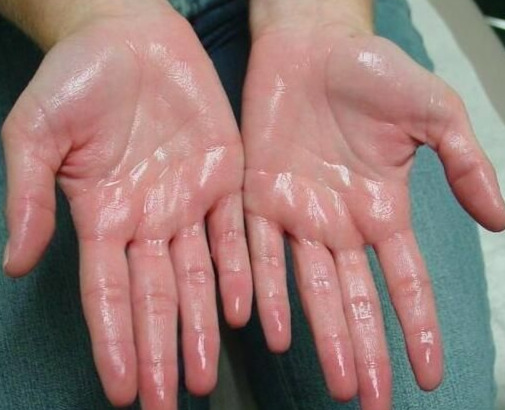
- Palms of your hands (palmar hyperhidrosis).
- Forehead and cheeks (craniofacial hyperhidrosis).
- Genitals.
- Lower back.
The most common location on your body to experience excessive sweating is the palms of your hands
Triggers That Cause Sweating
Your body produces sweat to cool itself down and prevent overheating. There may be certain triggers in your environment that can cause your sweat glands to produce more sweat, including:
- Certain emotions like stress, anxiety, fear or nervousness.
- Warm temperatures or humidity.
- Exercise or physical activity.
- Certain foods and beverages, like spicy foods, fatty foods, sugary and salty foods, and foods with high levels of protein. Beverage examples include caffeinated beverages (coffee) and alcohol.
The Real Impact: How Hyperhidrosis Affects Your Daily Life
Beyond the physical discomfort, hyperhidrosis can hit hard emotionally and socially. In our culture, where handshakes are a staple of greetings, sweaty palms can lead to awkward moments. Students in crowded classrooms might avoid raising hands, while professionals could miss out on networking opportunities. It can even affect mental health, leading to depression or isolation.
Economically, constant laundry, ruined shoes, or buying special products adds up – not ideal in a country where many are mindful of budgets. Plus, in rural areas, limited access to specialists means people suffer in silence. Other complications include:
- Skin infection
- Skin changes, such as paleness, discoloration, cracks, or wrinkles.
- Maceration, or unusually soft, moist skin
- Social anxiety and embarrassment
- Poor self-confidence
Myths Busted: Separating Fact from Fiction
- Myth: Hyperhidrosis is just poor hygiene. Fact: It's a medical condition, not about cleanliness.
- Myth: Only overweight people get it. Fact: It affects all body types.
- Myth: It goes away with age. Fact: Primary types often persist, but treatments help.
- Myth: Sweating a lot means you're unhealthy. Fact: Not always – it could be hyperhidrosis alone.
Treatment Options: From Simple Fixes to Advanced Solutions
- Lifestyle Changes and Home Remedies
- Wear breathable cotton clothes and open shoes
- Use strong antiperspirants with aluminum chloride
- Avoid triggers like spicy foods or caffeine
- Stay hydrated and use talcum powder to absorb moisture.
- Medications:
- Topical creams like glycopyrrolate wipes for targeted areas.
- Oral meds like anticholinergics to reduce overall sweating, but watch for side effects like dry mouth.
- Procedures:
- Iontophoresis: A device that uses mild electric currents to "stun" sweat glands – great for hands and feet.
- Microwave therapy (miraDry): Destroys underarm sweat glands permanently; emerging in private clinics.
- Surgery: Endoscopic thoracic sympathectomy (ETS) cuts nerves causing sweating, but it's a last resort due to risks like compensatory sweating elsewhere.
What tests diagnose hyperhidrosis?
At Health-Link Natural Clinic, we may use one of the following tests to determine the cause of hyperhidrosis:
- Starch-iodine test: This is the application of iodine solution to the sweaty area and then starch over it. In areas with excessive sweating, the solution turns dark blue
- Paper test: This includes placing a special paper on the affected area to absorb sweat. Later, we weigh the paper to determine how much sweat you have.
- Blood or imaging tests: These tests can take a sample of your blood or take pictures underneath your skin to help us learn more about what causes your symptoms.
Is There a Cure For Hyperhidrosis?
There is currently no cure for focal hyperhidrosis. However, various treatments can help reduce symptoms and enhance your quality of life. At Health-Link Clinic, we find that generalized hyperhidrosis may resolve if we address the underlying cause, which could result from either an existing medical condition or a medication you are taking. It’s important to note that not all cases of generalized hyperhidrosis can be cured.
Can Hyperhidrosis Be Prevented?
Not all cases of hyperhidrosis are preventable. For instance, focal hyperhidrosis, which may have a genetic basis, cannot be prevented. If you experience generalized hyperhidrosis, addressing any underlying health conditions can be beneficial. Additionally, collaborate with your healthcare provider to manage any side effects of prescribed medications to reduce the chances of developing hyperhidrosis.
A Note From Health-Link Natural Clinic
Excessive sweating caused by hyperhidrosis can be a short-term or long-term condition that is challenging to manage. Worrying about how others might react to your symptoms, such as shaking a sweaty hand, may lead you to withdraw from social situations. While there is no cure for hyperhidrosis, assistance is available. At Health-Link Natural Clinic, we recommend a prescription-strength antiperspirant or medications to help reduce your symptoms.